Skip to the main content.

6 min read

Budget vs. Forecast: Which One Matters More for Business Growth?

Budget vs. Forecast: Which One Matters More for Business Growth?

Whether you have a newly started business or an established one, smart budgeting and forecasting are essential parts of your overall financial planning and management strategy. 

The trouble is that you may still be struggling with outdated spreadsheet processes, which are tedious and prone to errors.

In this budget vs. forecast guide for businesses, you'll understand the difference between budgets and forecasts, as well as why the two are critical for transparency, collaboration, and smarter financial decisions.

Calculator, coins, and dollar bills arranged neatly on wooden desk.

TL;DR - Budget vs. Forecast

Let's get started with a high-level overview of the advantages, disadvantages, and use cases for each process. 

Budget Forecast
A fixed, planned financial framework created for a set period, typically a fiscal year. A rolling financial projection that estimates future income, costs, or performance based on current patterns, historical data, and emerging conditions.
Pros Pros
  • Supports strategic planning and control as a roadmap linking your goals and available resources.
  • Supports efficient resource allocation to activities where ROI will be most significant. 
  • Establishes performance targets for accountability, encouraging financial discipline and cost control. 
  • Reflects real-time financial data, allowing your business to adapt to changing market conditions. 
  • Useful for making short-term decisions and achieving operational agility. 
  • Helps identify emerging trends, risks, and opportunities while supporting frequent updates. 
Cons Cons
  • Rigid and inflexible in that it may not adapt to changing business realities. 
  • Prone to functional myopia, where departments are conflicted on achieving their targets at the expense of overall business goals.
  • Can encourage a “use-it-or-lose-it” mindset that could lead to inefficient spending. 
  • Relying too much on recent trends may lead to inaccurate projections during volatile periods. 
  • May lead to complacency if regular reforecasting paints an overly favorable picture. 
  • May be less detailed or granular than a full budget, and may lack strategic context. 
Best For Best For
  • Best for stakeholders seeking a stable financial framework, including investors, top executives, and the board. 
  • Best for long-term strategic planning with set financial goals and measuring success over a defined fiscal year. 
  • Best for business managers and teams seeking flexibility in response to market and internal dynamics. 
  • Best for operational planning, scenario modeling, and short-term decision support. 


What is a Budget?

A budget is a fixed, planned financial framework created for a set period, typically a fiscal year. 

Budgeting outlines the expected revenues (income) and expenses (costs) you anticipate, based on your business’s strategic goals and operational plans. 

The budget acts as a roadmap for how you'll manage financial resources, ensuring your departments and teams align with the broader organizational goals.

Once set, budgets usually remain static, meaning they don't change even when actual performance or external conditions change. 

For example, you may allocate $200,000 in your annual budget for marketing, ensuring you have sufficient funds for events, digital content, and advertising campaigns. 

You can also have departmental and project budgets. For instance, you can dedicate $300,000 to the IT department for staff training, hardware upgrades, and software licenses. 

Purpose of Budgeting in Business

Budgeting helps businesses to plan, manage, and assess their financial performance in relation to their strategic objectives. 

Here are two key purposes:
  1. Accountability and Transparency: A budget establishes clear financial expectations, helping managers, executives, boards, and business owners monitor spending, evaluate performance, and ensure that resources are assigned and used responsibly.
  2. Alignment with Mission and Long-Term Goals: By allocating finances based on priorities, budgeting ensures each department and initiative supports your overarching mission and long-term objectives. 

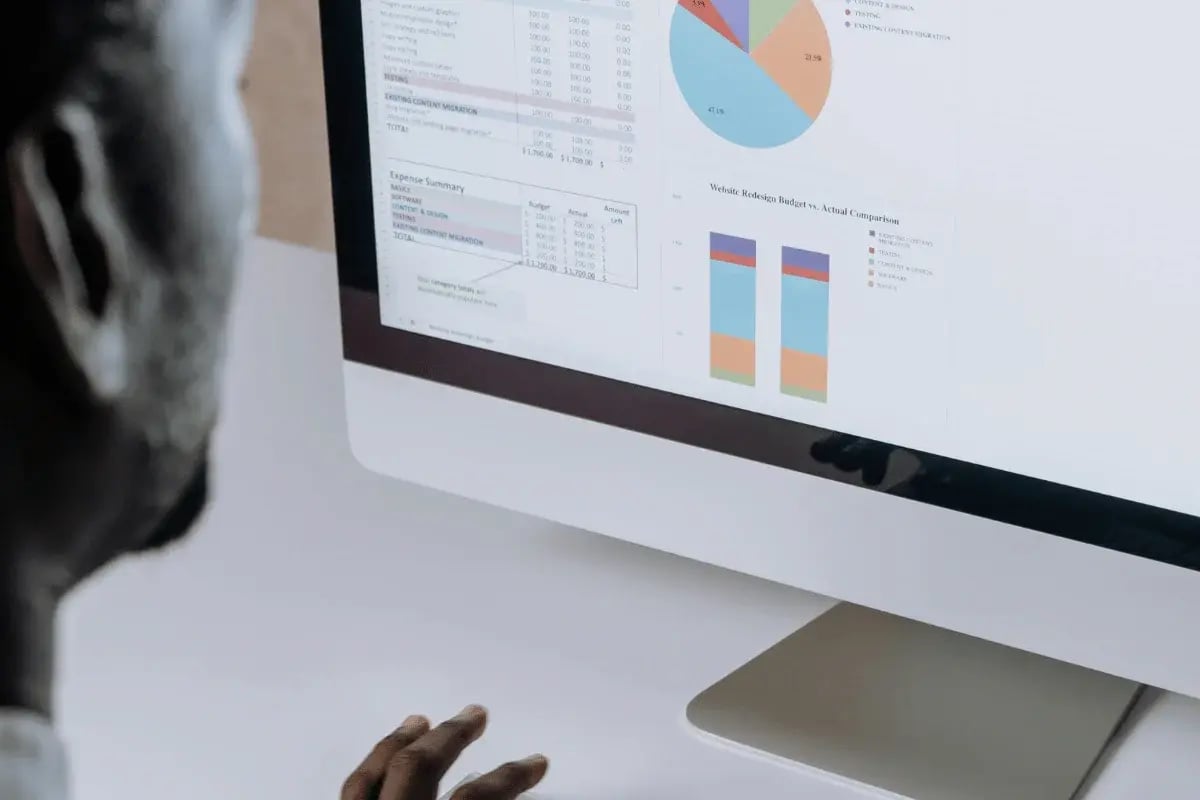
Professional analyzing financial charts and graphs on a desktop monitor.

Key Characteristics of a Budget

Your budget can have the following critical aspects:

  • Fixed Period: The budget rarely changes once approved. 
  • Goal-Oriented: Budgets are tied to strategic and contextual objectives such as cost savings, growth targets, and expansion plans. 
  • Performance Measurement Tool: A budget is usually used to check whether departments, projects, or teams stayed “on budget”. 

Benefits of Budgeting

Budgeting offers several financial and strategic advantages, such as:

  • Building Stakeholder Trust Through Transparency: A clear budget demonstrates how you plan and utilize funds, fostering confidence among staff, investors, top leaders, and boards. 
  • Controlling Overspending and Enforcing Financial Discipline: Your budget sets spending limits, helping you avoid financial risks and stay within your means. 
  • Aligning Resources with Mission Priorities: Once you direct funds to strategic goals, it's easy to ensure that your limited resources support the projects and activities that matter the most. 

Business professional reviewing detailed financial charts on a laptop screen.

What is a Forecast?

A forecast is a rolling, adaptive financial projection that estimates future income, costs, or performance based on current patterns, historical data, and emerging conditions. 

Businesses update forecasts regularly to reflect real-time business realities.

For instance, a mission-driven healthcare facility can forecast monthly costs based on recent patient volume and service usage, staffing levels and labor costs, and community and mission-oriented programs. 

The business can forecast expenses by tracking past spending, current expenditure, and fluctuations in market prices. 

If you are a startup, you can project cash flow to anticipate funding needs throughout your fiscal year. 

Purpose of Forecasting in Business

Forecasting provides the timely insights you need to manage uncertainty and make better decisions. 

The process serves two key purposes:

  1. Maintaining Agility Despite Uncertainty and Rapid Changes: Forecasts help businesses to quickly adapt their plans and reallocate resources when revenues fluctuate or market conditions shift. 
  2. Supporting Scenario Planning and Proactive Decision-Making: With a forecast, you project multiple possible outcomes, allowing you to test various strategies and prepare for best- and worst-case scenarios. 

A man explaining something to a group during an outdoor meeting.

Key Characteristics of a Forecast

A forecast can have the following critical aspects:

  • Dynamism and Continuous Updates: A forecast is a flexible financial tool that evolves regularly on a weekly, monthly, or quarterly basis to align with the latest internal and external data. 
  • Driven by Data Rather Than Assumptions: Forecasts are based on actual performance, patterns, and market changes rather than fixed projections or one-time assumptions. 
  • Focus on Short- to Medium-Term Planning: Forecasts are ideal for plans and decision-making for the near future, helping you respond to immediate risks or opportunities. 

Benefits of Forecasting

Forecasting delivers the key advantages below:

  • Faster, Data-Driven Decisions: Regular updates allow business owners and executives to make quick but informed decisions based on the most recent financial and operational data. 
  • Visibility into Cash Flow and Future Risks: Forecasts enable businesses to identify potential surpluses or shortfalls early, thereby improving financial stability and risk management. 
  • Improved Collaboration Between Finance and Operations: The forecasting process promotes cross-functional input, which helps align financial and non-financial teams around common goals and expectations. 

Business professional reviewing data spreadsheet on laptop screen.

Detailed Comparison Between Forecast and Budget

Here's a closer look at the difference between budgets and forecasts based on various aspects:

Features Forecast Budget
Timeframe Relies on a rolling or adaptive system with regular updates.  Typically annual.
Flexibility and responsiveness Highly flexible, updated regularly, and reacts to real-time changes. Typically fixed once approved, and is less responsive to changes.
Primary use and focus Used for operational decision-making and focuses on projecting trends and outcomes. Used for strategic planning and control with a focus on managing resources and spending. 
Data dependence and detail level Based on actual, current data, and has a less detailed but high-level overview. Based on assumptions and targets, and is more detailed and specific.
Alignment Adjusts tactically to changing business and market conditions. Aligned with long-term goals through strategic and mission-driven planning.


How Budgets and Forecasts Work Together

Budgets and forecasts serve different purposes, but they are complementary tools in financial management. 

A budget sets the foundation for proper financial planning and management, with clear goals and spending limits. 

Forecasts keep the budget or plan relevant by adapting it to actual performance and real-time market changes. 

When used together, budgets and forecasts provide a comprehensive financial picture. The budget provides structure and accountability, while the forecast ensures a business remains agile and responsive throughout the fiscal year. 

As a financial management platform for businesses, Martus unifies budget and forecasting with notable solutions such as:

  • Collaboration: Martus promotes a collaborative, unified approach that promotes transparency, team alignment, and real-time financial visibility. 
  • User Inclusivity: Martus features a user-friendly interface that's easy for both financial and non-financial users, enabling them to adjust plans, track progress, and stay aligned with mission-driven priorities. 
  • Streamlined Budgeting: We offer powerful tools, including Budget Builder, Budget Approvals, Automatic Roll-Up to Overall Budget, and Team/User Management to streamline your budgeting process.
  • Streamlined Forecasting: Our forecasting tools allow you to reforecast and adjust for unexpected events, forecast for new locations or services, and obtain actuals to use in long-term planning. 

Talk to one of our experts today to see how Martus can transform your budgeting and forecasting process. 

Close-up of hands writing notes in a business meeting environment.

Mistakes Businesses Make With Budgeting and Forecasting

Now that you know the best budgeting and forecasting software for your business, you must avoid the following mistakes to budget and forecast smoothly:

  • Relying Solely on Spreadsheets: Manual budgeting and forecasting processes using spreadsheets lead to errors, inefficiencies, and version confusion, especially if your organization has outgrown spreadsheets. Opt for a cloud-based platform to rely on up-to-date data drawn in real-time from your accounting system. 
  • Treating Budgets as “Set and Forget” Documents: A static budget becomes outdated if you don't revise or adjust it. Adopt a monthly, quarterly, or semi-annual revision schedule to maintain alignment between resources and expenditure.
  • Failing to Connect Budgets and Forecasts: When your budgets and forecasts are disconnected, your financial management strategy gets out of touch with real-time needs. You can use Martus to connect the two processes to ensure your strategy is current and futuristic. 

Close-up of someone counting cash with dollar bills on a desk, surrounded by papers, a calculator, and a laptop.

The Bottom Line - Forecast vs. Budget

You don't have to choose between budget and forecasts or prioritize one over the other. The two financial instruments are essential and complementary. 

A budget provides structure and accountability, while a forecast promotes adaptability to changing internal and external conditions.

You can use Martus to unify budgeting and forecasting under one platform for empowered, mission-driven financial planning and management.

Transform your budgeting and forecasting processes with Martus today

Group of professionals discussing strategy during a team meeting.

Frequently Asked Questions (FAQs)

Here are answers to the questions business owners and leaders typically ask about budgets and forecasts:

Is a Forecast More Accurate Than a Budget?

Forecasts are generally more accurate than budgets because they are data-driven, revised projections of expected financial outcomes. They incorporate actual business performance, market changes, and real-time data. 

Unlike forecasts, budgets are typically static and lack the realistic current view of a business’s financial position. 

How Does Inflation Impact Budgets Versus Forecasts?

Inflation alters budgets by increasing actual costs beyond the suggested amounts due to higher prices for products or services. 

On the forecasting side, inflation makes forecasts less accurate. Your revenue and expenditure projections require adjustments to reflect changes in purchasing power. 

Do Startups Need Both Budget and Forecast?

Mission-driven startups require both budgets and forecasts to strike a balance between purpose and financial health. 

Forecasting helps manage uncertainty, plan for growth, and demonstrate sustainability to investors or funders. 

Budgeting ensures disciplined spending, supports healthy cash flow, and aligns resources with the startup’s mission. 

When the startup combines the two, it gains financial clarity, control, and strategic direction towards its mission-first objectives.

What the Numbers Don’t Show: The Hidden Forces Driving Personnel Budgets

What the Numbers Don’t Show: The Hidden Forces Driving Personnel Budgets

Based on insights from our Martus Personnel Budgeting webinar, this article examines the hidden costs that influence nonprofit staffing decisions....

Read More
Legacy ERP System Migration Explained: Step-By-Step Playbook

Legacy ERP System Migration Explained: Step-By-Step Playbook

Outgrowing your older ERP system and looking to upgrade it?

Read More
AI-driven Financial Planning: Use Cases, Challenges, and Future Trends

AI-driven Financial Planning: Use Cases, Challenges, and Future Trends

Does your finance team spend countless hours each month updating budgets manually? Is it tedious, time-consuming, and prone to errors?

Read More