 Martus Solutions
SOC 2 Compliance for Budgeting Software: What Finance Leaders Need to Know
SOC 2 helps organizations evaluate a budgeting software provider’s controls for protecting sensitive financial ...
Read More
Evaluating the financial impact of a change, such as launching a new program or using a large grant, can be challenging for your nonprofit without an effective budget impact analysis.
But what exactly is a budget impact analysis, and how do you do it like a pro? Join us to discover these and more in this guide.
Pro Tip: Martus fits the bill nicely as a budget impact analysis tool. As a dedicated financial management software for nonprofits, Martus helps you model various scenarios to understand the opportunities and risks of a given change.
You can also create detailed forecasts to assess whether a certain change is financially viable before you make a life-changing decision.

|

|
A nonprofit budget impact analysis (BIA) is a financial assessment that estimates how a specific change, such as a new initiative, funding source, or policy, will affect an organization's overall budget.
The process projects both the additional costs and potential revenues associated with the change to uncover its net impact on financial sustainability.
Budget impact analysis helps you make strategic decisions in a nonprofit. Your leaders can understand the budgetary effects of expanding programs, adjusting staffing levels, or launching a new service.
By analyzing these impacts early, your nonprofit can make informed decisions that align with the available resources, your mission, and long-term financial goals.

Nonprofits usually operate on tight margins where every change in funding or expenses needs thoughtful forecasting. BIA is important in decision-making for various reasons:

Budget impact analysis uses structured and thoughtful approaches to estimate how changes affect a nonprofit's budget.
Let's check out some common methods.
A static model provides a snapshot of the financial impact of a change at a single point in time, usually one fiscal year.
The model is simple and helps you plan in the short term. For example, you can use it to analyze the effect of adding a part-time staff member in the current fiscal year.
A dynamic model looks at how the financial impact of a change changes over time, usually over several years.
Dynamic models help with long-term planning or applying initiatives in phases. For example, you can project the five-year cost and revenue impact of a new food provision program.
With the cost-per-unit method, you calculate the cost of a change based on a single unit, which could be an event, service, or person.
The model helps you estimate budget impacts when scaling up or down. Let's say you spend $50 to feed one beneficiary per week. If you plan to serve 100 more people, the added cost will be $5,000.
If you use the per-period model, you break down the cost of a change based on time periods, usually monthly, quarterly, or annually.
The per-period model helps you align your projections better with cash flow and budgeting cycles. Assuming you have to incur rent for a new office at $2,000 per month, you'll have a total annual cost impact of $24,000.
Note: You can use these methods together or separately, depending on the complexity of the change being analyzed.
See how Martus can streamline your budgeting and reporting.
|
|
|

Budget impact analyses typically have several elements, regardless of the model you use to derive the estimates. These can include:
You can define the period over which the analysis will happen. The duration is typically 1 to 3 years, which helps you forecast short- and medium-term impacts and align with most nonprofit budgeting and strategic planning cycles.
For instance, a senior citizen center planning a new outreach program might model costs and revenue impacts over three years to see if the initiative will be sustainable.
You can establish a clear picture of your current spending and revenue before you introduce a change.
These parameters become the baseline for comparing and measuring the financial impact of the changes.
For example, before hiring new staff, you can outline your current personnel costs, caseloads, and service levels.
For this component, you note all the expected expenses and funding sources related to a certain change. You'll want to include one-time startup costs and ongoing operational expenses.
When rolling out a new outreach program, for instance, you can face the following:
You can use this element to test how results change under different assumptions to help account for uncertainty in aspects such as funding amounts and increased expenses.
What would happen if a new program grows its participants faster than expected? Will staffing costs increase as a result? What would happen if a key grant reduces?
Having these elements in your analysis ensures you get a well-rounded review of potential financial outcomes to help you make smarter decisions amid uncertainty.

Here's how you can perform a nonprofit budget impact analysis in a few easy steps.
Pro Tip: An effective BIA calls for all departments to collaborate. The finance team brings cost accuracy, while the program team ensures you are operationally realistic since they have more context-specific knowledge.

Speaking of effective budget impact analysis, it's best to use a nonprofit-oriented financial management platform.
You can use basic BIA solutions like spreadsheets, but they usually lack visibility, version control, consistency, or collaborative access.
In place of spreadsheets, you can use Martus, a nonprofit-specific financial management platform, as your BIA tool.
Martus can help you do the following:
Martus gives you the structure and visibility that often lacks in spreadsheets, so you can manage complex financial changes and budget more strategically.
Gain financial clarity and optimize your budgeting process with Martus today.
|
|
|
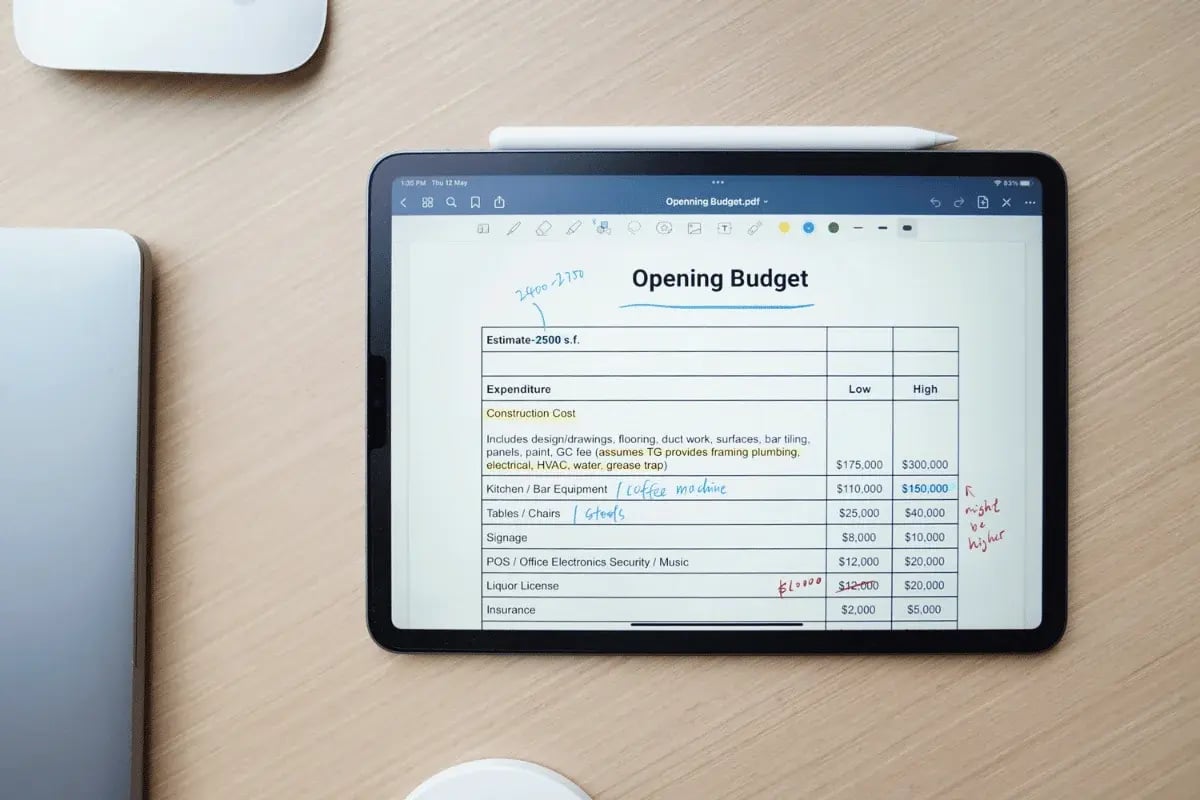
As a nonprofit, you should look at BIA as a decision-making tool that you can apply across the organization rather than just a routine financial exercise.
Here are some real-world nonprofit examples where you can apply BIA:
When planning your HR budget, you might have to hire for a new role based on a grant. A BIA helps you estimate the total personnel costs (such as salaries and onboarding), and assess the effect after the grant ends.
The short-term strain here can be upfront recruitment and training expenses.
The long-term benefit can be an increased capacity to serve beneficiaries better and the potential to attract future funding once you show a commendable impact.
Let's say you want to triple the size of your food program. BIA helps project the added costs of food, staffing, and logistics.
You can also model different donation levels or participation rates among beneficiaries.
Your short-term strain will be higher upfront costs during peak months. The long-term benefit can be broader community outreach and stronger donor support.
You might be exploring a new donor management or volunteer scheduling platform to reduce the amount of time you spend on repetitive administrative duties.
A BIA will help you compare setup and subscription costs with the time savings and operational efficiency you expect.
The implementation and training costs for the new tool will be a short-term strain. Your long-term benefit can be reduced manual work, better data tracking, and the potential for your staff to focus more on delivering your mission.

While budget impact analysis is a powerful financial management solution, you might face the following challenges.

We'll close the discussion with common questions professionals usually have regarding nonprofit budget impact analysis.
The ideal time frame or horizon for a BIA is 1 to 3 years.
This duration balances between short-term planning (such as assessing immediate costs, funding cycles, and staffing changes), and long-term impact (such as growth of new programs, sustainability after a grant ends, and return on fundraising investments.
Creating a budget impact model (BIM) in a nonprofit should be a collaborative effort featuring the CFO, program directors, CEO, and program staff.
To perform an effective BIA, your team will require skills such as data analysis, collaboration, analytical reasoning, budget forecasting and projections, and scenario modeling.
Attention to detail and familiarity with nonprofit accounting software and financial management tools like Sage Intact and Martus are also important.
Artificial Intelligence (AI) and machine learning (ML) can improve how your nonprofit forecasts and analyzes the financial impact of your decisions.
AI can analyze historical data on changes in key aspects like spending trends to predict future costs and revenues more accurately.
Machine learning can model scenarios at scale to show how your budget might respond to changes in programs, expenses, or funding levels in real time.
When your nonprofit embraces effective budget impact analysis, you can make smarter decisions, communicate more clearly with different stakeholders, and manage your finances better.
BIA supports evidence-based forecasts, modeling different scenarios, and testing different assumptions to see how a certain change affects your budget, mission, and long-term financial goals.
Your organization can use Martus, a nonprofit-dedicated financial management platform, to perform repeatable and reliable budget impact analysis.
Martus helps you compare scenarios, track program-specific costs and outcomes, and align Impact planning with grant requirements related to various changes.
Streamline your budget impact analysis with Martus now.
|
|
|
.png)