 Martus Solutions
SOC 2 Compliance for Budgeting Software: What Finance Leaders Need to Know
SOC 2 helps organizations evaluate a budgeting software provider’s controls for protecting sensitive financial ...
Read More
Contrary to popular belief, nonprofit accounting isn't just about numbers. It's about transparency, accountability, staying focused on your organization's mission, and maximizing impact.
In this guide, we explore the basics of accounting for nonprofits to help your financial and operational teams gain financial clarity and confidence.
Besides an accounting tool, your system should include a dedicated nonprofit financial management platform that integrates budgeting and reporting into one central place.
Martus fits this role nicely, allowing you to manage and report your finances through collaborative budgeting, automated financial reporting, and automatic data pulls from your linked accounting software.
Check out Martus today to streamline how you manage and account for your finances.
Nonprofit accounting relies heavily on a purpose-driven mission, where financial management practices center around accountability to funders and the public, rather than creating profits for shareholders.
The mission-first approach leads to the following differences in how a nonprofit records, categorizes, and reports financial information compared to a for-profit business.

When managing a nonprofit, you'll want to understand the basics of nonprofit accounting to ensure you manage your finances properly and maintain your nonprofit status.
Let's review the key principles that guide accounting for charitable organizations.

Nonprofits use the following set of core financial statements to track their financial health, demonstrate transparency, and show how they use their funds to support their mission.
As part of nonprofit financial reporting, these statements are important when it comes to showing accountability. They also help you make strategic decisions based on evidence and reliable data.

Accounting for nonprofits is easy once you know the process. Here's a quick look at how the process works to support transparency and mission-driven financial management.

When choosing the right software for nonprofit accounting, it's best to consider platforms built with nonprofits in mind.
Let's check out the best accounting software for nonprofits for modern solutions.

As a tailored nonprofit financial management platform that integrates with over 25 accounting tools, Martus specializes in budgeting, forecasting, and financial reporting.
Martus is ideal for medium to large organizations looking for advanced budgeting and reporting tools. Such organizations usually manage multiple programs, grants, and departments, which require enough financial visibility and collaboration across teams.
With Martus, you get key features such as:
Request a personalized demo to see Martus in action.
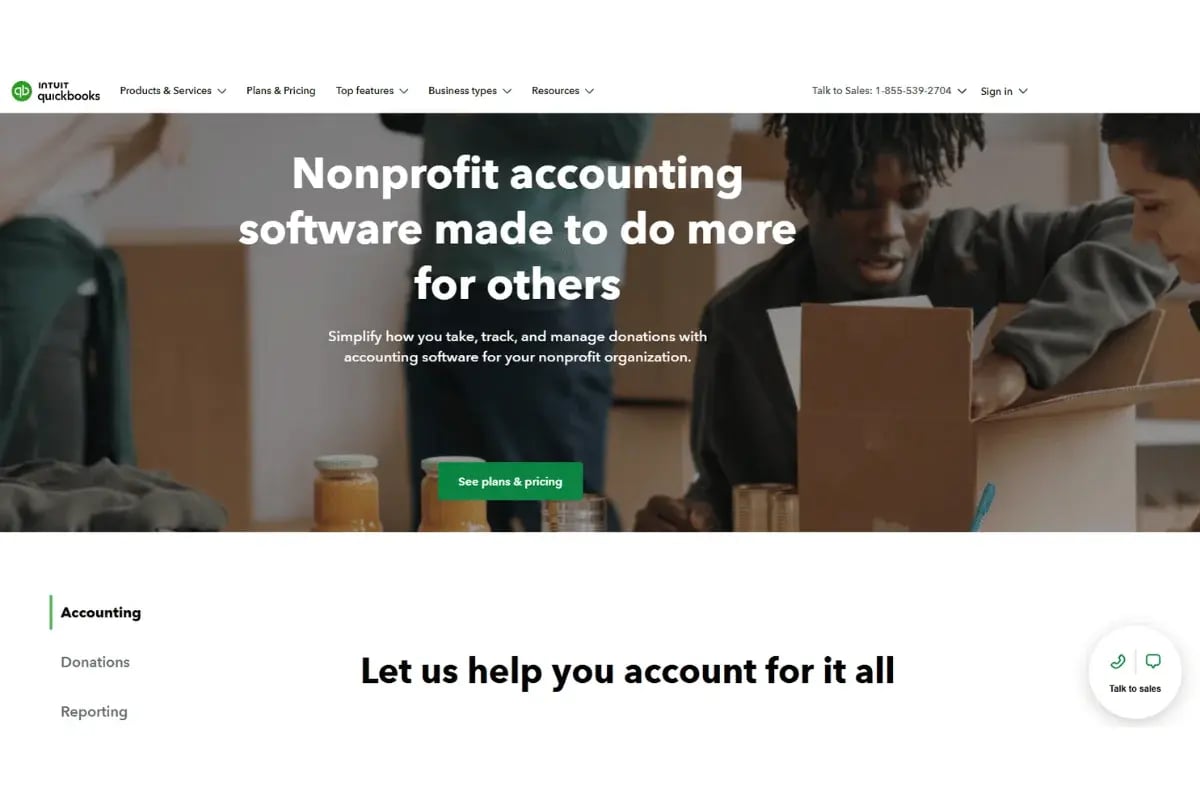
QuickBooks Nonprofit is ideal for small to medium organizations that are just starting to make their accounting professional.
The tool allows you to use the following features:

Aplos is ideal for small to medium nonprofits looking to combine accounting with donor management and program tracking without needing separate systems for finance and fundraising.
You can have the following key features with Aplos:
The platform you choose depends on how complex your organization is and how much you need beyond basic accounting. With Martus, you get better accounting functions through accounting software integrations and transformative financial management solutions.
To keep your organization financially healthy and aligned with your mission, here are some top nonprofit accounting best practices to apply.

Like many nonprofits, you may face accounting hurdles that could slow down your operations or risk compliance. You should be on the lookout for the challenges below.

Let's end the guide with a few questions people usually ask about nonprofit accounting.
The treasurer in a nonprofit is usually part of the board and acts as the financial link between the board and the organization's staff.
They collaborate with cross-functional teams in budgeting, strategic planning, and financial reporting. Nonprofit treasurers also help manage risks, prepare for audits, and develop financial policy.
A nonprofit's program expenses are the costs directly related to delivering the core mission and services. Administrative expenses are the costs of running the organization itself.
For example, a tutoring program may include direct expenses such as staff salaries, transport, and learning supplies.
You can incur regular administrative expenses such as rent for office space, salaries for executive leaders and accounting staff, or office supplies and equipment.
Most nonprofits conduct audits annually or every few years. The frequency depends on the purpose of the audit, the complexity of your organization, and government regulations.
You can always conduct an audit whenever your organization undergoes a significant change in operations.
Yes, nonprofits can invest their funds to promote financial growth and sustainability. You can invest some of your funds in bonds, treasury bills, stocks, money market funds, and mutual funds.
For a nonprofit organization, strong accounting is the foundation for funder trust, financial health, and mission success.
Proper accounting demonstrates transparency, which builds funder trust and encourages them to continue supporting your mission with finances and other resources.
You can adopt and implement accounting tools and best practices that support transparency and streamline compliance with funder or legal requirements.
Martus stands out as a tailored nonprofit financial management platform that integrates with your accounting software to streamline how you plan, record, and report your finances.
You can enjoy collaborative budgeting, automatic importation of actuals from your accounting tool, and even automated financial reporting.
Book a customized demo today to see Martus in action at your organization.
.png)